Insights
Insights brings together reflections on architecture, landscape design, contemporary gardens, and the designers whose work shapes the way we understand and inhabit places.
Beyond completed projects and realised landscapes, this section explores the ideas, approaches, and works that deepen our understanding of landscape. Architects, landscape architects, artists, remarkable gardens, and questions related to trees and the city: each article is an invitation to observe the spaces we live in from a different perspective.
Because a project never emerges solely from a plan or a planting palette, but also from a culture, a sensitivity, and an ongoing reflection on the relationship between people and their environment.
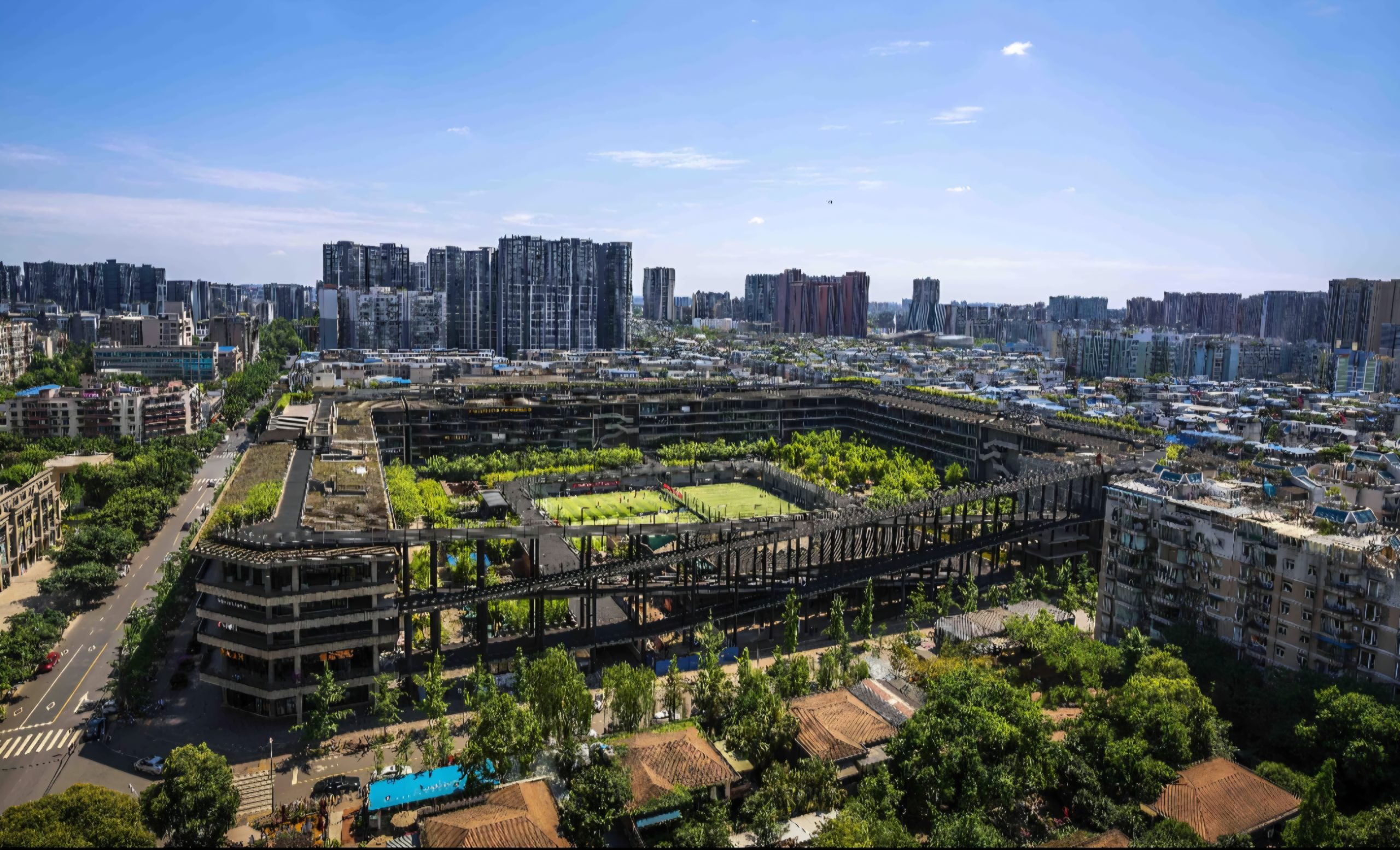
Liu Jiakun, or the Art of Revealing a Place
A Lesson for Landscape Design
Renzo Piano in Nouméa: Architecture in Dialogue with Place
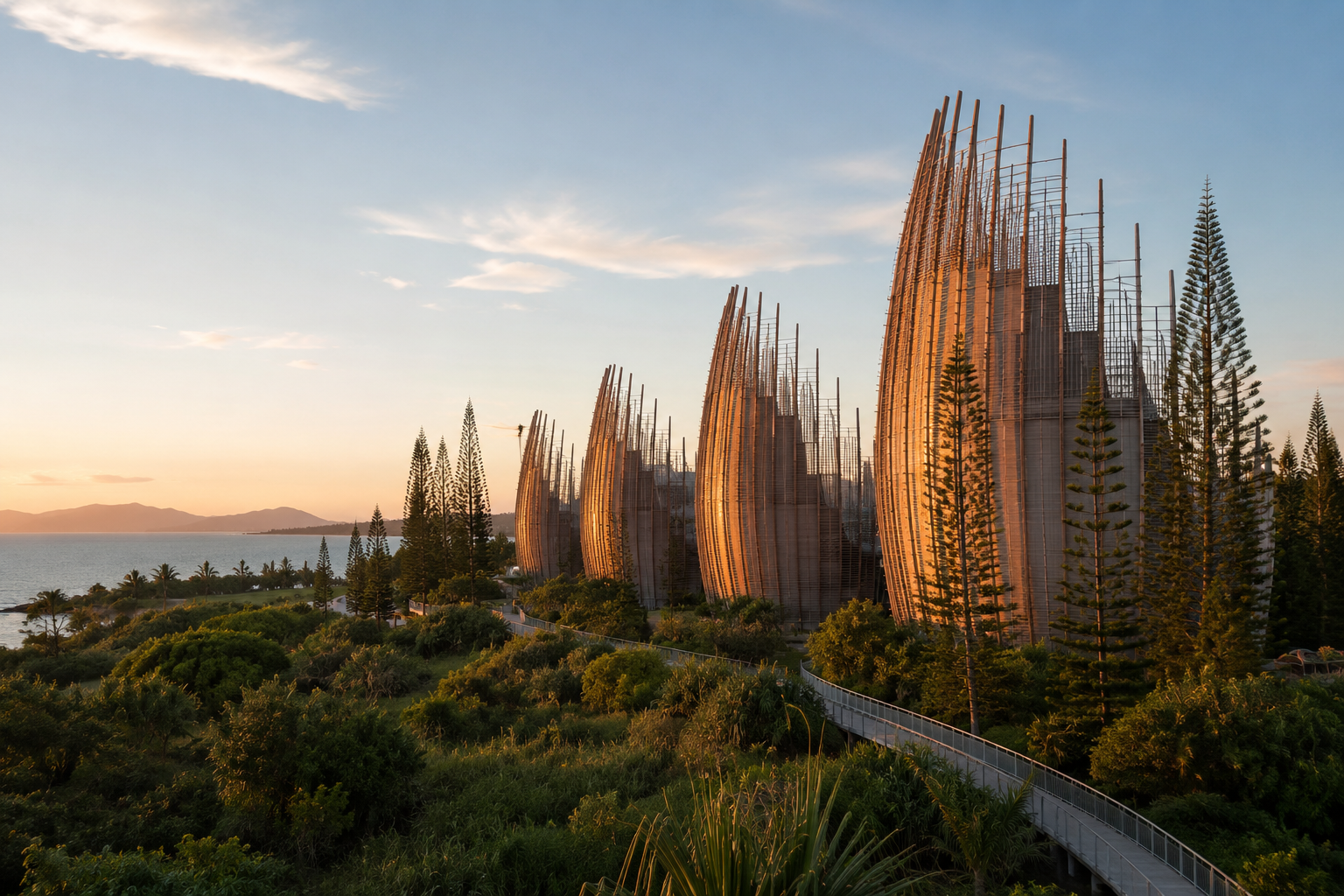
In 1998, in Nouméa, New Caledonia, Italian architect Renzo Piano inaugurated the Jean-Marie Tjibaou Cultural Centre, a project that has since become one of the major references of contemporary architecture. Designed to celebrate Kanak culture and honour independence leader Jean-Marie Tjibaou, who was assassinated in 1989, the building goes far beyond its cultural function. It offers a profound reflection on the way architecture can engage in dialogue with a territory, a memory and a climate.
What strikes visitors first is not the scale of the project, but its accuracy. Renzo Piano does not seek to impose an unfamiliar form upon the landscape. Instead, he undertakes a long process of understanding Kanak culture, its building traditions, its relationship with nature and its social organisation. The project emerges from this attentive listening.
The ten large timber structures that make up the centre evoke traditional Kanak huts without ever reproducing them literally. Their familiar silhouette engages with the Pacific winds, the mangroves, the vegetation and the topography of the Tina Peninsula. Architecture becomes a contemporary interpretation of a living heritage rather than a copy of the past.
One of the most remarkable qualities of the project lies in its relationship with climate. The tall wooden shells function as genuine environmental machines. Their shape captures the trade winds, encourages natural ventilation and reduces reliance on mechanical systems. Here, technology does not oppose nature; it extends and supports it.
The Tjibaou Cultural Centre is not an isolated architectural object. Renzo Piano conceived it as a village. The buildings are connected by pathways, gardens and public spaces that invite exploration. The circulation routes become just as important as the buildings themselves. Together, they create an inhabited landscape where architecture, vegetation and the ocean horizon contribute to a single experience.
A Lesson for Landscape Design
This project reminds us that a successful design does not begin with a form, but with an understanding of place.
In landscape design, there is often a temptation to apply recipes, styles or planting palettes regardless of context. Yet, as Renzo Piano demonstrates in Nouméa, every site already possesses an identity, a history and an internal logic that should be revealed rather than erased.
Designing a garden, a park or a terrace begins with observation. Observing the light, the wind, the topography, the existing vegetation, the uses and the memory of a place. The role of the designer is not always to add; it is often to reveal what is already there.
More than twenty-five years after its inauguration, the Jean-Marie Tjibaou Cultural Centre remains a remarkable example of thoughtful architecture. It demonstrates that modernity and rootedness are not opposites, but can instead reinforce one another.
Perhaps this is one of the most valuable lessons Renzo Piano offers us: building is not about dominating a place, but about entering into conversation with it.
Glenn Murcutt or the Art of Touching the Earth Lightly
Among the contemporary architects who have profoundly renewed our understanding of the relationship between building and landscape, Glenn Murcutt occupies a unique place. Awarded the Pritzker Prize in 2002, the Australian architect devoted his entire career to a simple yet demanding idea: building with a place rather than against it.
His famous motto perfectly encapsulates this philosophy:
Touch the Earth Lightly."
Far from spectacular gestures and iconic architecture, Glenn Murcutt developed an approach deeply attentive to climate, topography, vegetation and human use. Each project begins with a careful observation of the site. Wind, light, seasons and plant communities become fundamental design elements.
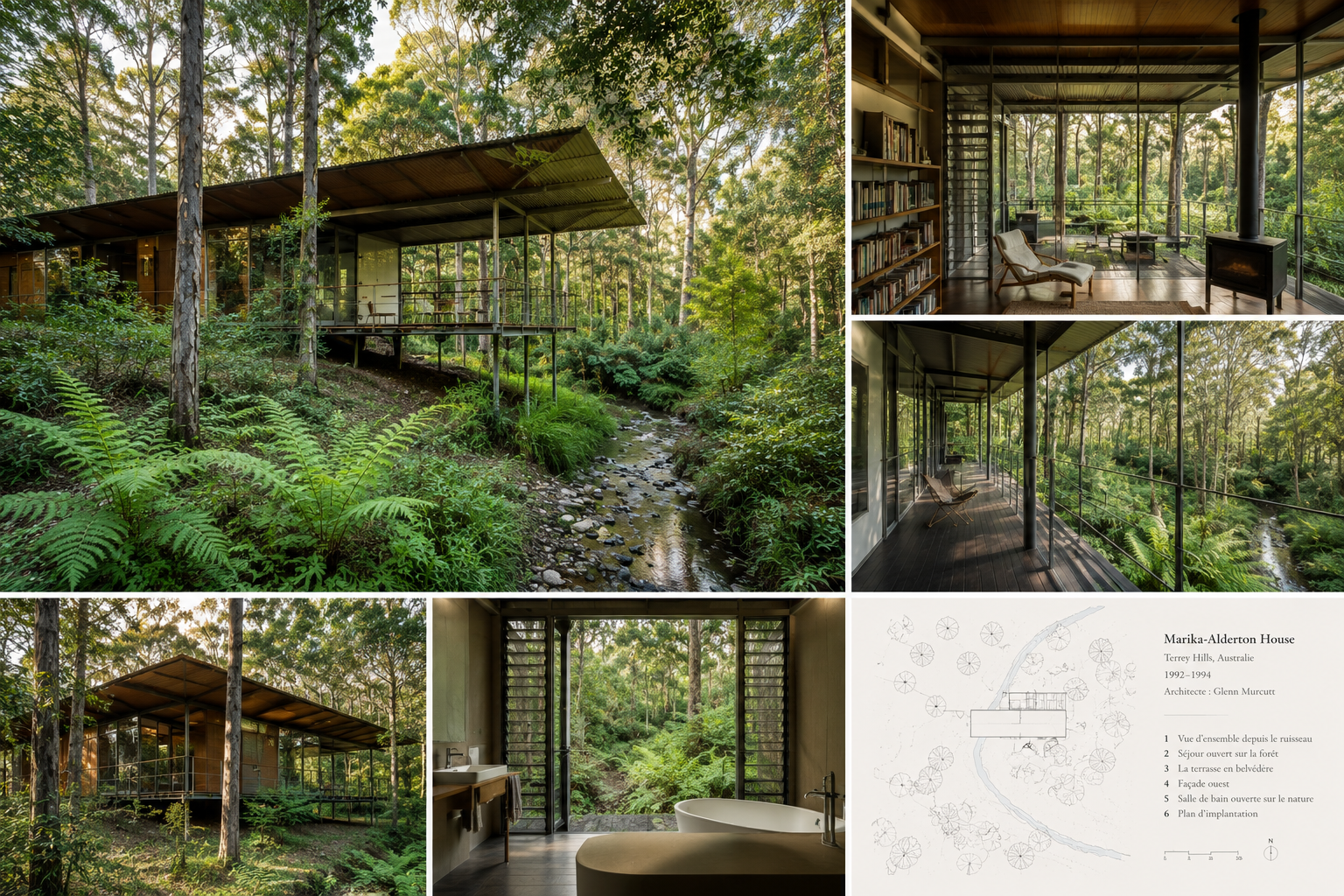
The Marie Short House, built in the Australian countryside, is one of the most accomplished expressions of this approach.
Set within an open landscape of grasslands, native trees and natural vegetation, the house appears almost to float above the ground. Raised on a light structure, it minimises its impact on the site while allowing water and wildlife to move freely beneath the building.
The architecture does not seek to dominate the landscape. It is inserted discreetly among the trees and follows the natural lines of the terrain. Materials, proportions and openings are carefully designed to extend the dialogue with the surrounding environment rather than isolate the building from it.
One of the most remarkable qualities of the project lies in its response to climate. Wide roof overhangs provide protection from the Australian sun, while the façades encourage natural ventilation. The house functions as a living organism capable of taking advantage of the resources offered by its environment.
Vegetation is not treated as decoration. It fully participates in the experience of the place. Trees filter the light, frame the views and create a permanent relationship between interior and exterior. The dwelling thus becomes an extension of the landscape rather than an autonomous object.
A Lesson for Landscape Design
This project reminds us that the success of a design does not necessarily depend on its scale or complexity. The quality of an intervention often lies in its ability to understand what already exists.
In landscape design, as in architecture, the challenge is not only to create but also to observe before acting. Every site possesses its own geography, light, vegetation and memory.
Glenn Murcutt invites us to see a site not as a blank page, but as a living reality with which it is necessary to enter into dialogue.
Perhaps this is one of the most valuable lessons a designer can receive: before transforming a place, learn to listen to it.